 The camera we will be using to shoot our video is the Canon EOS 550D, which I have never used before, so this will be a new technology I will need to experiment with and teach myself how to learn.
Before I have even touched the camera, I researched some key words associated with the camera, so I know the correct terminology and a bit more about how the camera works.
Shutter Speed is the length of time the camera lens is open, which controls the amount of light allowed through the lens of the camera to the sensor. There are many different types of shutter speeds from a fraction of a second to several seconds long.
You would want to change the shutter speed, as on a bright day when there is a lot of light, if the shutter is open for a long time, more light will reach the sensor resulting in your pictures being very pale and white. This is Over Exposure. When there is not much light, you will need to shutter to be open for longer so more light can reach the sensor unless you will have an Under Exposed image which will be very dark.
Aperture is the size of the opening in the lens where the light travels through. It is another way determining how much light is let through to the sensor. The larger the opening the more light that is let through. Aperture is measured in 'f-stops' . Moving from one 'f-stop' to the next doubles or halves the size of the opening. A smaller 'f-stop' means a larger Aperture and more light, and a larger 'f-stop' number means a smaller Aperture so less light.
The ISO (International Standards Organisation) is another way to judge how much light is let in. ISO changes the camera's sensitivity to light. A higher ISO number means the camera's sensor is more sensitive to the light, so not much light is needed to be let in. However, the higher ISO number, the more 'grainy' your picture will be.
White Balance is the process of editing pictures so that objects that are white, appear white in the picture. Cameras often take images that have a blue or yellow shade to them. The most commonly used White Balance setting is Auto which is when the camera makes the best guess on the shot, however there are more that are present on most cameras. Fluorescent is useful to 'warm up' pictures, so stops the blue shade forming, where as Tungsten is useful for indoor shooting where light bulb's often create a yellow shade, so this balance will 'cool down' your shot.
The different Exposure modes are pre-programmed settings already stored on the camera that control the shutter speed, Aperture and ISO. Auto Mode use the built in light meter to determine these three things depending on the results. Shutter Priority Mode is the camera's priority, and allows you to select a shutter speed while the camera adjusts the Aperture. A fast shutter speed freezes the action, where as a slow shutter speed will show movement. Aperture Priority Mode means the Aperture is the priority and while you change this, the camera chnages the shutter speed. Manual Mode is when you control the Shutter Speed, Aperture and ISO. Scene Modes offer options best for a scenario. Some scene modes are Portrait, Lanscape, Night, Party etc.
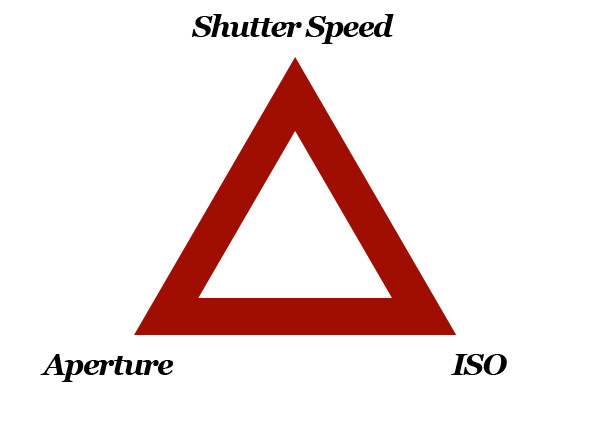
The Exposure Triangle are the three ways to control the exposure of your pictures. These are Shutter Speed, Aperture and ISO.

Thorough notes, Chloe. Could you reflect on your experience of using the camera for the first time today and whether it has affected your plans for your music video? Ms Keenan
ReplyDelete